



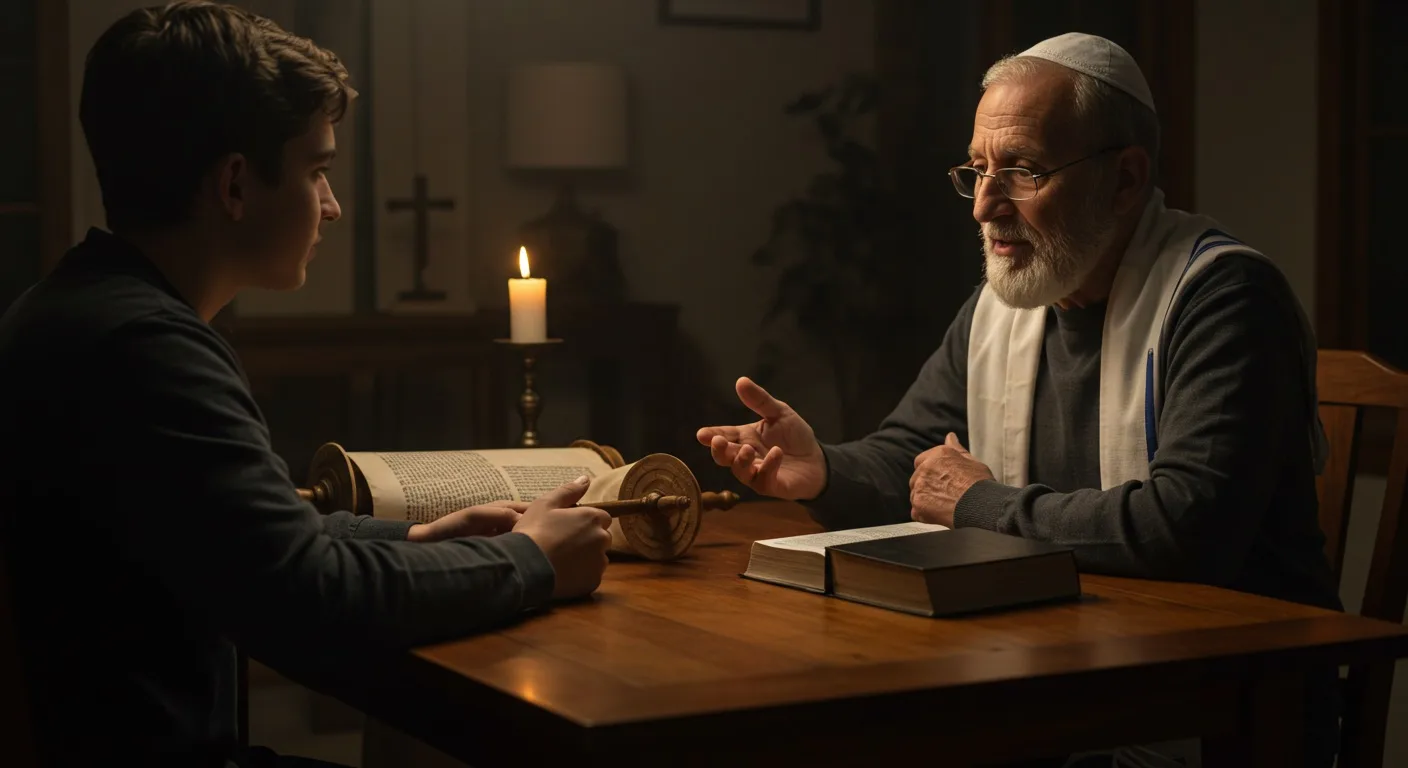
Biblical Parenting: What We Can Learn from Jewish Culture
🔎 Why is Jewish Parenting Gaining Attention?
Jews are renowned worldwide for their high educational standards and social influence.
📌 A significant proportion of Jews graduate from prestigious universities like Harvard, Yale, and Princeton.
📌 Approximately 22% of Nobel Prize winners are Jewish.
📌 Jewish professors make up 40% of Ivy League faculty leading academia in the United States.
So, how do Jewish parents educate their children?
And is their approach biblical and in harmony with Reformed faith?
This article will analyze Jewish parenting methods from the perspectives of Scripture, Reformed theology, and the Westminster Confession of Faith, highlighting practical applications for us.
“Faith education begins at home; how can we put this into practice?”
📊 Comparing Jewish and Reformed Approaches to Parenting
The table below summarizes the differences between Jewish educational methods and those emphasized in Reformed faith.
| Category | Jewish Parenting | Reformed Parenting (Biblical Approach) |
|---|---|---|
| Focus of Education | The home as the primary educational institution | The home as the primary educational institution (Deuteronomy 6:4-7) |
| Main Educational Content | Education centered on the Torah (Law) | Education centered on the Bible (Old and New Testament) |
| Method of Education | Memorization + Discussion (Havruta) | Biblical principles + Use of Westminster Shorter Catechism |
| Role of Parents | Teachers (providing guidance in faith and life) | Spiritual leaders (nurturing with God’s Word) |
| Transmission of Faith | Tradition and rituals (Shabbat, Bar Mitzvah, etc.) | The work of the Word and the Spirit (2 Timothy 3:16-17) |
| Knowledge vs. Relationship | Emphasis on knowledge of God | Emphasis on relationship with God and the grace of salvation |
| Practice of Faith | Emphasis on adherence to the Law (Halakha) | Faith through the freedom and obedience found in Jesus Christ |
| Family Worship | Emphasis on Shabbat (Sabbath) | Emphasis on Sunday worship and family devotion |
| Starting Age for Bible Education | Teaching the Torah from age 3 | Early Bible education (Proverbs 22:6) + Use of Westminster Shorter Catechism |
| Social Goals | Community development through academic and economic success | Passing on faith for the expansion of God’s Kingdom |
| Community Role | Education centered in the Jewish community | Growing in faith within the church community |
| Parenting Goals | Raising children to be law-abiding Jews | Raising children to be God-fearing Christians |
📌 Sources
- 《The Jewish Way in Love & Marriage》 – Maurice Lamm
- 《Why Jews?》 – Marvin Tokayer
📖 1️⃣ Faith Education at Home (Deuteronomy 6:4-7)
Jewish education begins in the home.
Parents bear the direct responsibility for teaching their children about faith, which aligns closely with Reformed beliefs.
📖 “You shall love the Lord your God with all your heart and with all your soul and with all your might. And these words that I command you today shall be on your heart. You shall teach them diligently to your children, and shall talk of them when you sit in your house, and when you walk by the way, and when you lie down, and when you rise.” (Deuteronomy 6:4-7)
✅ Key Takeaways
✔ Faith education should be centered in the home.
✔ Parents must actively teach the Bible and practice their faith in daily life.
✔ Rather than relying solely on church education, parents hold the primary responsibility for faith instruction.
💡 In Reformed faith, the Westminster Shorter Catechism can be used to apply this principle systematically.
📚 2️⃣ Biblical Teaching Methods: Havruta vs. Westminster Shorter Catechism
📌 Jewish Education: The Havruta Method
Jewish education employs the Havruta learning method, which encourages children to think critically and ask questions about the Bible.
✔ Start Bible study at age three
✔ Memorize the Pentateuch (Genesis to Deuteronomy) from age five
✔ Study the Oral Law (Mishnah) from age ten
✔ Havruta Method: Engage in discussions and study the Bible with friends
📖 “Your word is a lamp to my feet and a light to my path.” (Psalm 119:105)
✅ Key Takeaways
✔ Families should dedicate time to read and discuss the Bible together.
✔ Encourage children to ask questions and explore their faith.
📌 Faith Education Using the Westminster Shorter Catechism
Just as Jewish education helps children learn through the Havruta method,
Reformed faith can utilize the Westminster Shorter Catechism to teach biblical principles systematically.
📌 Reasons to Use the Westminster Shorter Catechism
✔ It teaches the core of faith systematically.
✔ Young children can easily understand and memorize it.
✔ It allows parents and children to engage in meaningful discussions about faith.
📖 Example Questions
- “What is the chief end of man?”
→ “To glorify God and enjoy Him forever.” - “What is God like?”
→ “God is spirit, infinite, eternal, and unchangeable.”
📌 Resources for the Westminster Shorter Catechism
- Westminster Catechism Q1-55: A Parent’s Guide to Christian Teaching (Free PDF)
- Korean Shorter Catechism (for Sunday School)
- Family Worship with Shorter Catechism: For Young Children (Ages 3-7) (YES24)
- The Kids’ Catechism (Westminster Standard)
- Westminster Shorter Catechism (For Kids) – Modern Puritans
🏫 3️⃣ Practical Education: Applying Faith in Life
The Jewish approach to education emphasizes application of knowledge rather than mere acquisition.
✔ Observe the Sabbath (Shabbat) with family worship
✔ Focus on practical education through charity, donations, and service
✔ Parents model their faith through direct practice
✅ Key Takeaways
✔ Teach faith not just as knowledge but help children put it into practice.
✔ Establish habits of prayer, gratitude, and sharing within the family.
✔ Use the Shorter Catechism to enhance practical faith education.
🎯 Conclusion: Where to Begin with Faith Education?
There is much we can learn from Jewish educational methods.
However, we must avoid legalistic elements and center our faith around Jesus Christ.
✅ Practical Checklist
☑ Memorize and apply one question each week.
☑ In family worship, use the Westminster Shorter Catechism.
☑ Parents should demonstrate faith through their actions.
📖 “You shall teach them diligently to your children…” (Deuteronomy 6:7)
👉 Let’s be parents who pass on the true faith to our children along with God’s word! 🙏
📢 What Are Your Thoughts?
💬 How are you practicing faith education at home?
💬 Have you had experience using the Westminster Shorter Catechism?